Ask a room of tattoo artists what separates a smooth, lasting tattoo from a patchy or blown-out one, and many will give you the same answer: needle depth. It's one of the first things you have to learn and one of the hardest to feel, because you can't see where the needle tip actually is once it's in the skin.
This guide breaks down what needle depth means, which layer of skin you're aiming for, what goes wrong when you miss, and which parts of your setup and technique really control it. It's written for beginning tattoo artists who want to understand the concept before they ever touch a client.
Note: this article is educational and does not replace training. Learn under an experienced, licensed artist, and follow your local health department's rules.
What Is Needle Depth?
In everyday talk, needle depth means how far the needle goes into the skin while you tattoo. You'll also hear it used for needle hang (also called needle extension or protrusion), which is how far the needle sticks out of your tube or cartridge tip. Those are two different things. Needle hang is a setting on your machine. Actual depth is what happens in the skin, and it changes with your hand, your machine and the skin itself.
Most sources agree that a tattoo needle typically deposits ink about 1 to 2 millimeters into the skin, roughly 1/16 of an inch. That sounds tiny because it is. A small change in your setup or your hand can be the difference between the right layer and the wrong one.
The 3 Layers of Skin
To understand depth, you need a quick map of the skin.
- Epidermis: the thin outer layer. It's constantly shedding and replacing itself, so anything left here will not last.
- Dermis: the middle layer, made of collagen, blood vessels, glands and hair follicles. It's more stable than the epidermis, which is why it's where tattoo ink is meant to settle.
- Hypodermis (subcutaneous tissue): the fat and connective tissue below the dermis. This is too deep for tattooing.
Your goal is simple to say and harder to do: pass through the epidermis and deposit ink in the upper dermis, not in the layers above or below it.
Too Shallow: Ink in the Epidermis
If the needle doesn't reach the dermis, the ink sits in the epidermis. As that layer sheds, the ink goes with it.
What it looks like:
- Patchy or faint color that doesn't seem to take
- Lines or shading that heal light, uneven or partly missing
- Ink that wipes away easily as you work
The upside is that this mistake is usually fixable. A touch-up, done at the right depth, can fill in what fell out.
Too Deep: Ink in the Hypodermis
Going past the dermis is the mistake most beginners fear, and for good reason. Ink that lands in the fat layer can spread, which causes a blowout: a blurry, bruise-like halo around the lines.
What it looks like:
- Heavy bleeding and swelling
- More pain for your client than the spot should cause
- Blurred, fuzzy lines that spread out from the design
- Slower healing and, in bad cases, scarring
Going deeper does not make a tattoo more permanent. It only causes extra damage to the skin.
Blowout vs. Normal Fading vs. Healing Smudge
Not every blurry tattoo is a blowout. A fresh tattoo can look smudged while it heals, and that usually settles within days. A blowout is blurry lines that stay, caused by ink sitting too deep. Normal fading from sun exposure and aging takes years. If lines look fuzzy and don't clear up as the tattoo heals, depth is the likely cause.
What Actually Controls Your Depth?
Here's the part that surprises many beginners: there's no single dial labeled "depth." Your real depth is the result of several things working together.
- Needle hang: how far the needle extends past the tip. This sets your working range, but not the whole story.
- Stroke length: how far the needle travels each cycle. A longer needle hang needs enough stroke to pull back and pick up ink properly. If your hang is long and your stroke is too short, the needle may not retract far enough to load ink, which leads to patchy results.
- Hand pressure and angle: how hard you press and how you hold the machine changes how far the needle goes in, even if your machine settings never move.
- Skin stretch: loose skin or skin that's being pulled and tugged can change how the needle behaves. Stretch the skin evenly and consistently.
- Body location: skin thickness varies a lot. Thin areas such as wrists, joints, ears and the face need a much lighter touch than thicker skin like the back.
Voltage Changes Speed, Not Depth
A common beginner mix-up is turning the voltage up or down to change how deep the needle goes. Voltage controls how fast the machine runs. It can change how the machine feels and how much trauma the skin takes if your hand speed doesn't match, but it isn't a depth control. If something feels off, check your cartridge, stretch, angle, pressure and hand speed before you reach for the power supply.
How to Practice Finding the Right Depth
- Start on practice skin. Synthetic practice skin lets you see how different settings and pressures change your lines before you work on a person. Keep in mind that it doesn't behave exactly like real skin.
- Change one thing at a time. If you change voltage, stroke, hang and pressure all at once, you won't know what made the difference. Adjust one setting, test it, then decide.
- Use a light, steady touch. Let the machine do the work. Pressing harder is a common reason new artists end up too deep.
- Be careful with "riding the tube." Some beginners keep the tube resting on the skin so it limits how far the needle can go. It can make depth easier to control and lower the chance of blowouts, but it can also hide your stencil. Treat it as a training aid, not a long-term fix.
- Check your results after healing. Ink that mostly falls out was probably too shallow. Blurry halos around the lines point to going too deep. Both are feedback you can use.
- Learn from a mentor. An experienced artist can watch your hand and tell you things you can't feel yet.
Quick Recap
- Aim for the upper dermis, around 1–2 mm (about 1/16 inch) into the skin.
- Too shallow means the ink sits in the epidermis and fades.
- Too deep means ink lands in the fat layer and can cause blowouts, bleeding and scarring.
- Depth comes from needle hang, stroke length, pressure, angle, skin stretch and body location working together.
- Voltage changes speed, not depth.
Build a Setup You Can Learn On
Consistent gear makes depth easier to learn, because you're only dealing with one variable at a time: your hand. A reliable cartridge, a stable power supply and a machine that holds its settings all help. If you're still choosing needles, start with our guide to tattoo needle groupings, and if you're setting up a coil machine, read Coil Tattoo Machine Setup for Beginners.
Want to try a few needle groupings before you commit to full boxes? A mixed box is an easy way to practice.
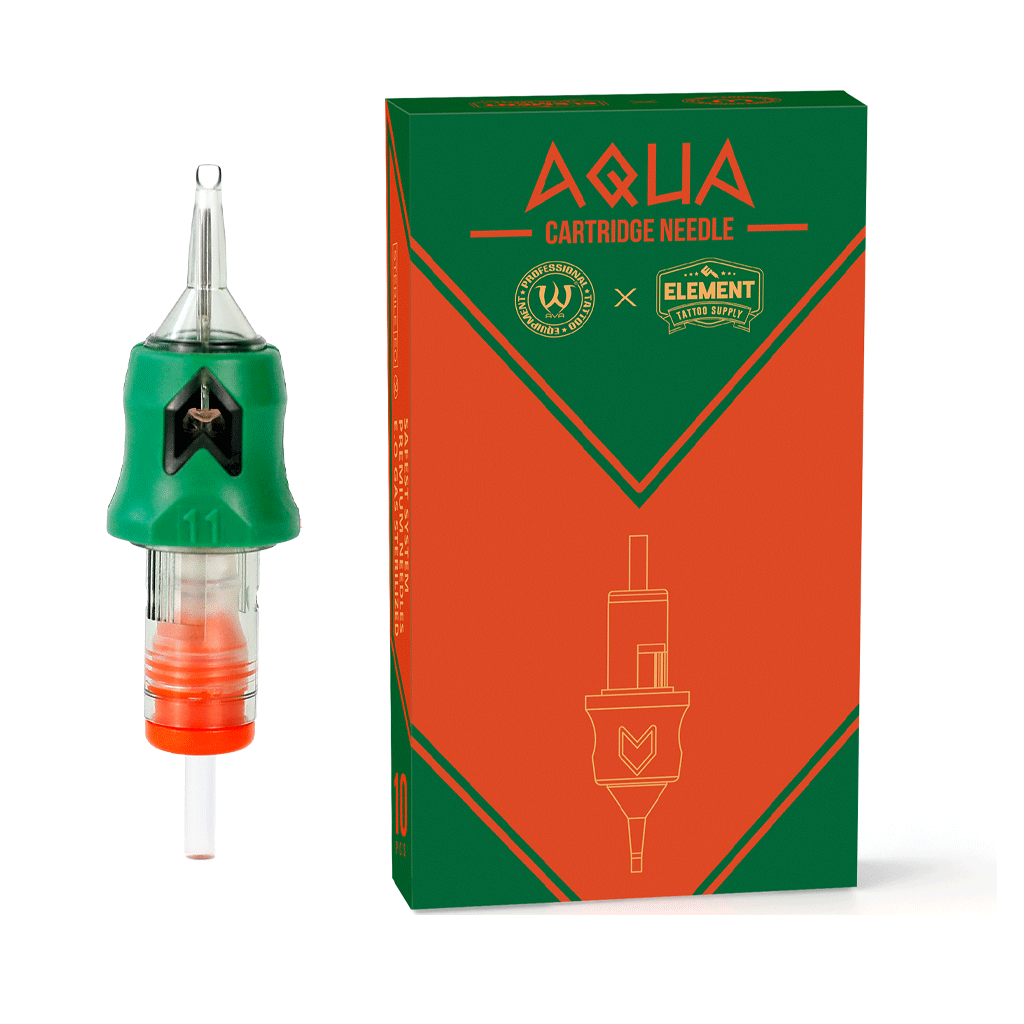
AQUA Cartridges Mixed Boxed 10 count